
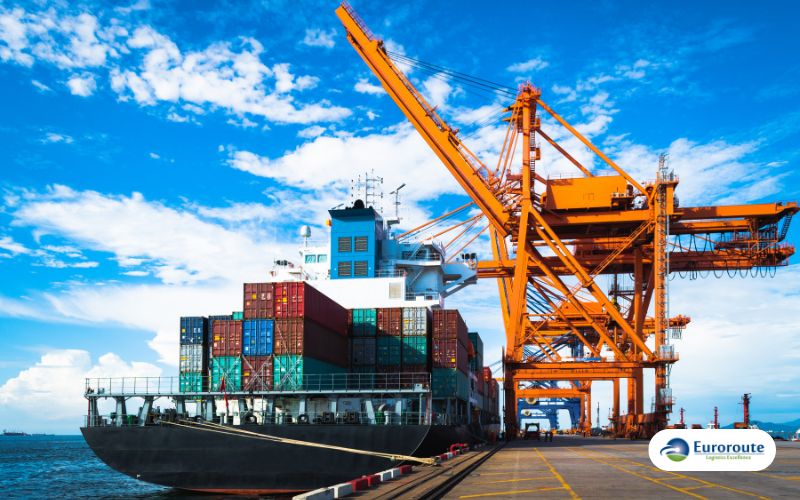
Ireland’s Direct EU Shipping Routes: What the Shift Means for Irish Supply Chains
Direct shipping routes between Ireland and continental Europe have changed how many Irish businesses manage freight, warehousing, and supply chain planning.
Before Brexit, the UK land bridge provided the fastest and most commonly used route for goods moving between Ireland and the EU. For many businesses, that model no longer offers the same level of predictability or operational simplicity.
As direct sailings from Dublin Port and Rosslare have expanded, Irish supply chains have gradually adjusted around new transit patterns, customs processes, and warehousing requirements. Businesses moving goods between Ireland and Europe now need logistics operations designed around direct EU access rather than older land bridge assumptions.
Brexit Changed the Operational Risk Profile
The UK land bridge remains important for many freight movements, but Brexit introduced customs administration, border processing, and additional delay risk that previously did not exist.
For larger operators with dedicated customs teams, the additional administration became manageable relatively quickly. Smaller importers, distributors, and manufacturers often experienced a greater operational burden because customs delays, paperwork issues, or missed transit windows affected inventory availability more directly.
Direct EU routes expanded in response. Services between Ireland and ports such as Cherbourg, Dunkirk, Roscoff, and Zeebrugge increased significantly after 2021, providing alternatives that reduced dependency on UK transit routes.
For many freight categories, direct sailings now offer greater predictability, particularly where delivery timing, stock availability, or customs reliability are commercially important.
Direct EU Routes Change More Than Transport Planning
Moving to direct EU shipping routes affects more than carrier selection. It changes how warehousing, fulfilment, inventory planning, and supplier coordination operate across the supply chain.
Businesses that previously relied on the flexibility of UK road freight often need to reassess:
dispatch scheduling
warehouse cut-off times
inventory positioning
replenishment planning
freight forwarding relationships
Direct services operate on different sailing schedules and frequency patterns than UK land bridge routes. As a result, warehouse operations need stronger coordination between inbound freight, stock availability, and outbound fulfilment planning.
The transition tends to operate more smoothly when logistics providers already have infrastructure, carrier relationships, and operational processes aligned to direct EU routes.
Stock Planning Requires Greater Precision
One of the more important operational changes involves stock positioning and demand forecasting.
Direct sailings can offer reliable transit times, but they do not always provide the same frequency or recovery flexibility that UK road freight previously allowed. Missing a sailing cut-off can affect replenishment timing more significantly than missing a UK road departure window.
For businesses handling:
time-sensitive products
manufacturing components
seasonal inventory
high-value stock
perishable goods
forecasting accuracy and safety stock calculations become more operationally important. Businesses that adjusted reorder points, inventory buffers, and warehouse planning early have generally adapted more effectively to the new routing structure.
What Irish Businesses Should Look for in a Logistics Partner
For businesses reviewing their logistics model, the practical capabilities of a logistics provider matter more than broad service claims.
Key operational considerations include:
warehouse proximity to Dublin Port or Rosslare
experience managing direct EU freight flows
relationships with freight forwarders and shipping operators
customs process familiarity
visibility across stock movement and inbound freight
warehouse management system integration
Supply chain visibility becomes increasingly important when inventory is moving across multiple ports, shipping schedules, and fulfilment stages simultaneously.
A logistics partner with infrastructure already aligned to direct EU routes reduces operational friction and supports more consistent planning.
Direct EU Shipping Is Now Part of the Baseline
Direct EU shipping routes are no longer viewed as temporary Brexit adjustments. For many Irish businesses, they now form a core part of long-term supply chain planning.
Operations built around direct EU access typically achieve greater resilience because warehousing, fulfilment, and transport planning are aligned to the current structure of Irish-European trade rather than older routing assumptions.
Euroroute provides warehousing, fulfilment, and logistics services from Dublin, supporting businesses moving goods between Ireland and continental Europe through direct EU shipping networks. Arrange a consultation today to review your current EU shipping operation.