
Euroroute ISPs
Choosing the Right Enterprise SSD: Performance, Capacity and Endurance Explained
Storage requirements vary considerably between workloads. A virtualisation platform, a busy database, a hosting environment and a high-capacity data platform may all depend on enterprise SSDs, but the right specification for each can be very different.
As data volumes grow and infrastructure teams support increasingly demanding cloud, virtualisation and data-intensive applications, choosing storage on capacity alone can create unnecessary cost or leave performance on the table. Three factors provide a useful starting point: performance, capacity and endurance.
Start with the workload
The first question is not which SSD has the highest specification. It is what the storage needs to do. An established server environment may prioritise compatibility and predictable enterprise performance.
A more demanding application may need the lower latency and higher throughput available from NVMe. Write-intensive workloads introduce another consideration: how much sustained writing the drive is designed to handle over its working life.
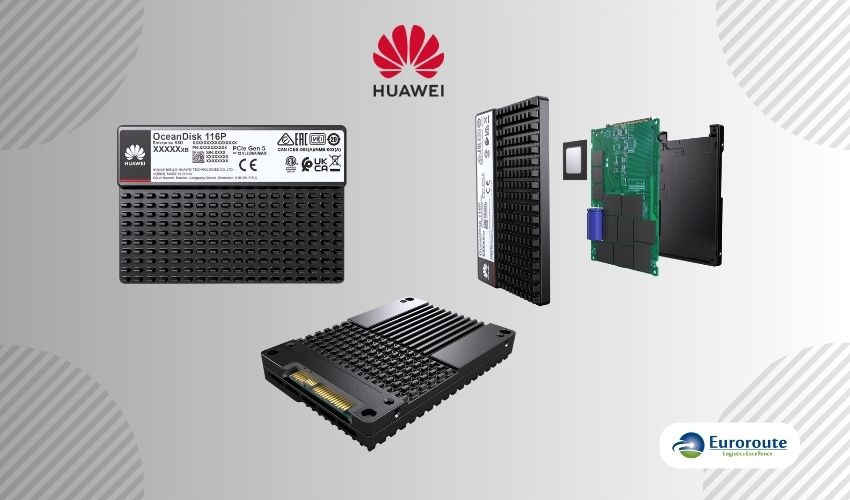
Huawei’s enterprise SSD portfolio gives infrastructure teams options across these requirements, including SAS, PCIe 4.0 and PCIe 5.0 products, multiple endurance tiers and capacities ranging from hundreds of gigabytes to tens of terabytes.
1. Performance: choose the right interface
SAS remains relevant across many established enterprise environments. The Huawei eKitStor Xtreme 300S family uses SAS 3.0 and provides a range of capacities and endurance options for organizations upgrading or expanding existing infrastructure.
For workloads that need greater throughput, NVMe over PCIe provides a different performance profile. Huawei’s eKitStor Xtreme 300P PCIe 4.0 family includes capacities up to 15.36 TB, with both 1 DWPD and 3 DWPD options. Huawei specifies sequential read performance of up to 7,400 MB/s on selected 300P models, alongside power-loss and media-failure protection.
The Euroroute portfolio also includes PCIe 5.0 products for newer infrastructure requirements. The practical point is not that every deployment needs the newest interface. Matching performance to the application helps avoid both under-specifying critical storage and paying for capability a workload will not use.
2. Capacity: plan beyond the immediate upgrade
Capacity requirements can look very different across a single-server refresh, a hosting platform and a larger data-centre deployment. Available capacities span from 480 GB SAS products through to high-capacity PCIe 5.0 options reaching 61.44 TB.
That breadth gives buyers more flexibility to design around the environment rather than force a standard capacity across every workload. It also matters when planning for growth. Storage selected for today’s requirement should leave room for how data volumes, applications and infrastructure may develop over the lifecycle of the deployment.
3. Endurance: understand how the drive will be used
Enterprise SSD endurance is commonly expressed as Drive Writes Per Day, or DWPD. In simple terms, it indicates how much of the drive’s capacity can be written each day over a specified period while remaining within its endurance rating.
A predominantly read-focused workload and a system performing sustained write activity do not place the same demands on an SSD. Options across the portfolio include 0.5, 1 and 3 DWPD, allowing endurance to be matched more closely to expected usage. Huawei specifies its SP560 1 DWPD and 3 DWPD ratings over five years under the stated test conditions.
Choosing the appropriate endurance tier can therefore have a direct commercial benefit. Over-specification adds cost where it may not create value, while insufficient endurance can increase lifecycle risk in write-intensive environments.
Finding the right Huawei SSD for the workload
Euroroute’s current Huawei SSD portfolio covers established SAS environments, mainstream PCIe 4.0 NVMe requirements, higher-endurance workloads and high-capacity PCIe 5.0 infrastructure.
Rather than treating this as a list of individual products, the starting point should be the workload: how fast the storage needs to operate, how much data it needs to hold and how intensively it will be written.
Euroroute can help customers work through those requirements, identify appropriate Huawei enterprise SSD options and provide current information on pricing and availability across the UK, Ireland and Europe.
Planning a storage upgrade?
If you are reviewing enterprise SSD requirements, upgrading server or storage infrastructure speak with the Euroroute team today about the Huawei range and the options best suited to your workload.